I've been wearing this watch for about a week. Nobody asks about it at first. Then someone does, and the conversation that follows is never short.
That's the Nomos effect.
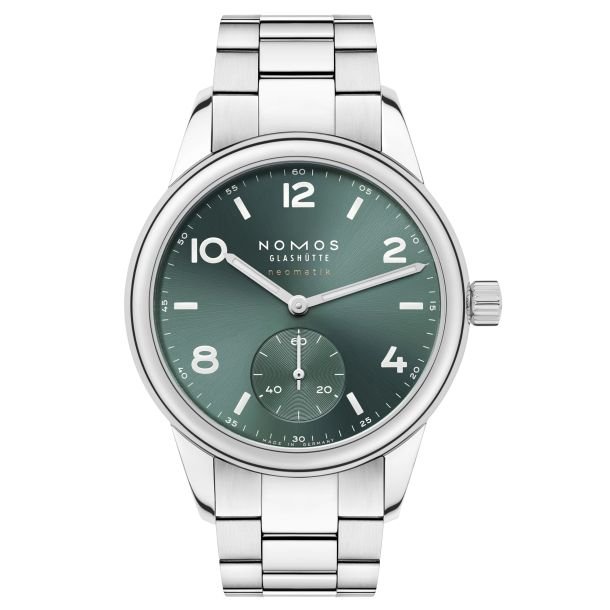
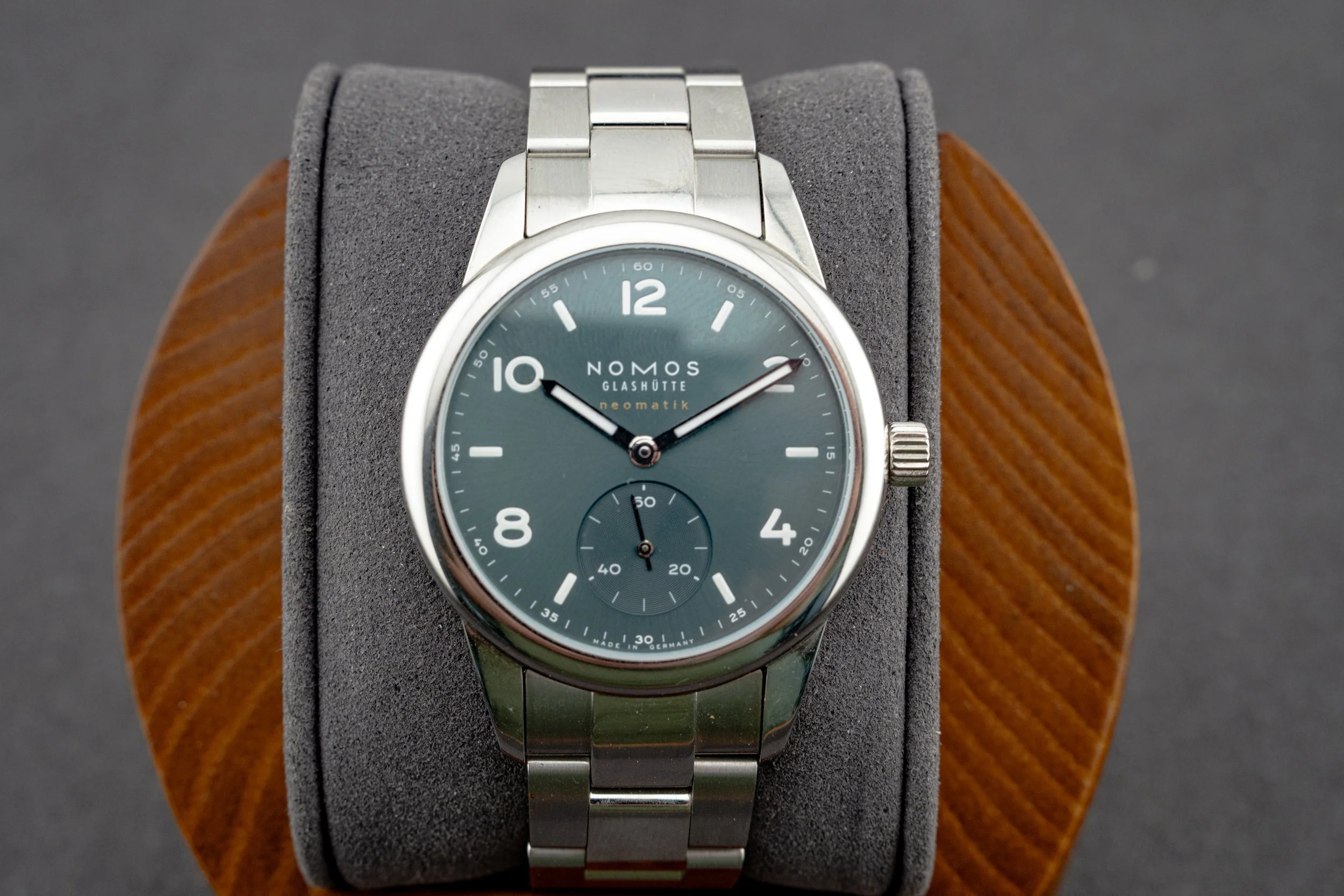
The Club Sport neomatik 37 Petrol is not a watch that asks for your attention. It's a watch that rewards the people who give it anyway.
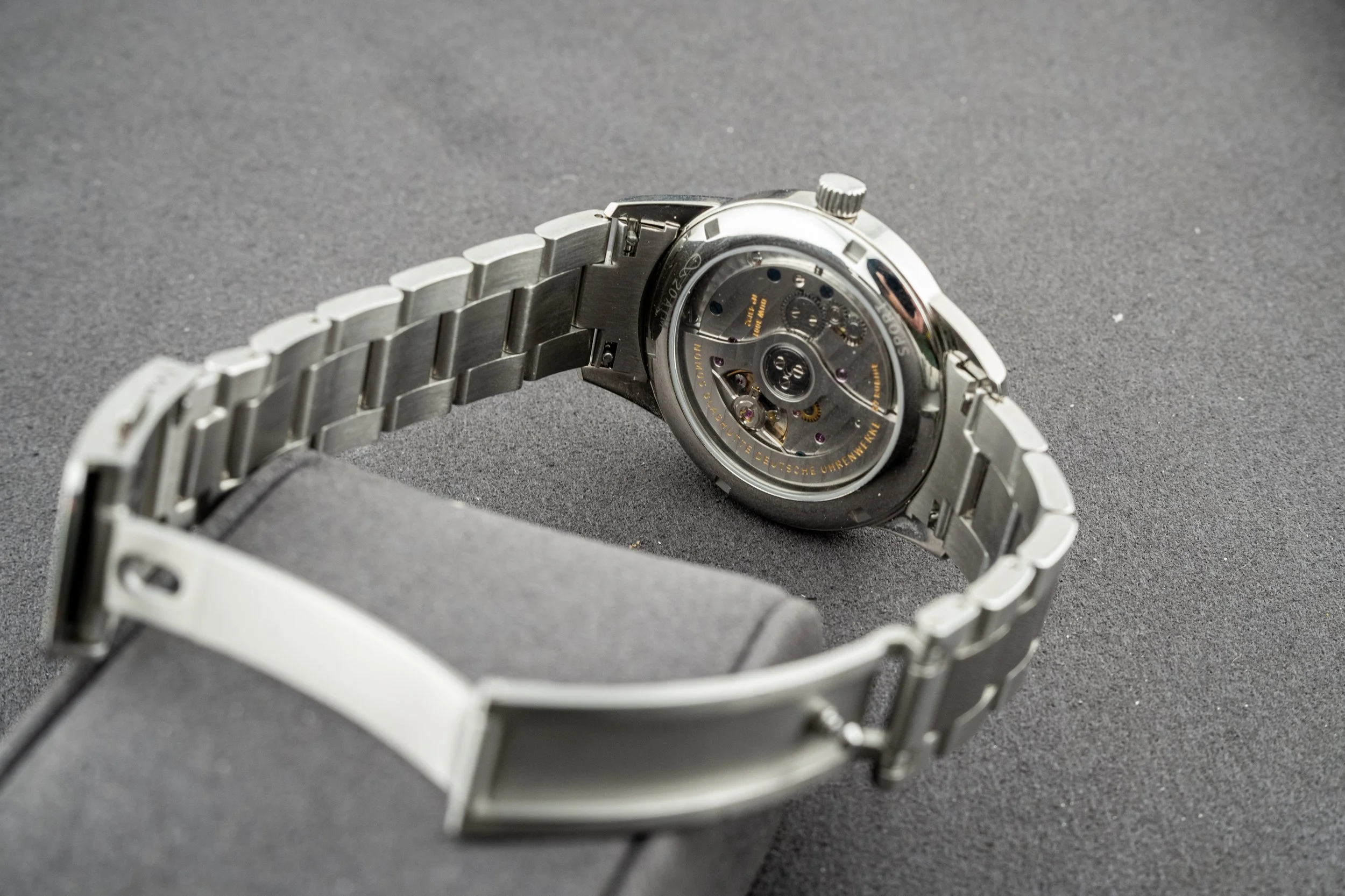
Nomos is based in Glashütte, Germany — the legally protected center of German horology, and the largest producer of mechanical watches in the country. That matters because this is not a design brand wearing the costume of watchmaking. The caliber inside — the DUW 3001 neomatik — is developed and produced in Nomos's own manufacture. Slim, efficient, more considered than the price point suggests.
The spec sheet is worth sitting with. 37mm wide. 8.3mm thick. 47.7mm lug-to-lug. Screw-down case. 200 meters of water resistance. A serious sports watch hiding inside a civilized silhouette.
The Petrol dial is where this reference earns its name. In low light it reads almost charcoal-green. Move into the sun and the sunburst character comes through. Depth without novelty. The familiar Nomos language is all here — clean minute track, slim baton hands, crisp typography, small seconds at 6. Bauhaus-adjacent without becoming clinical.
Flip it. The transparent caseback shows you the movement. That's where the price becomes irrelevant.
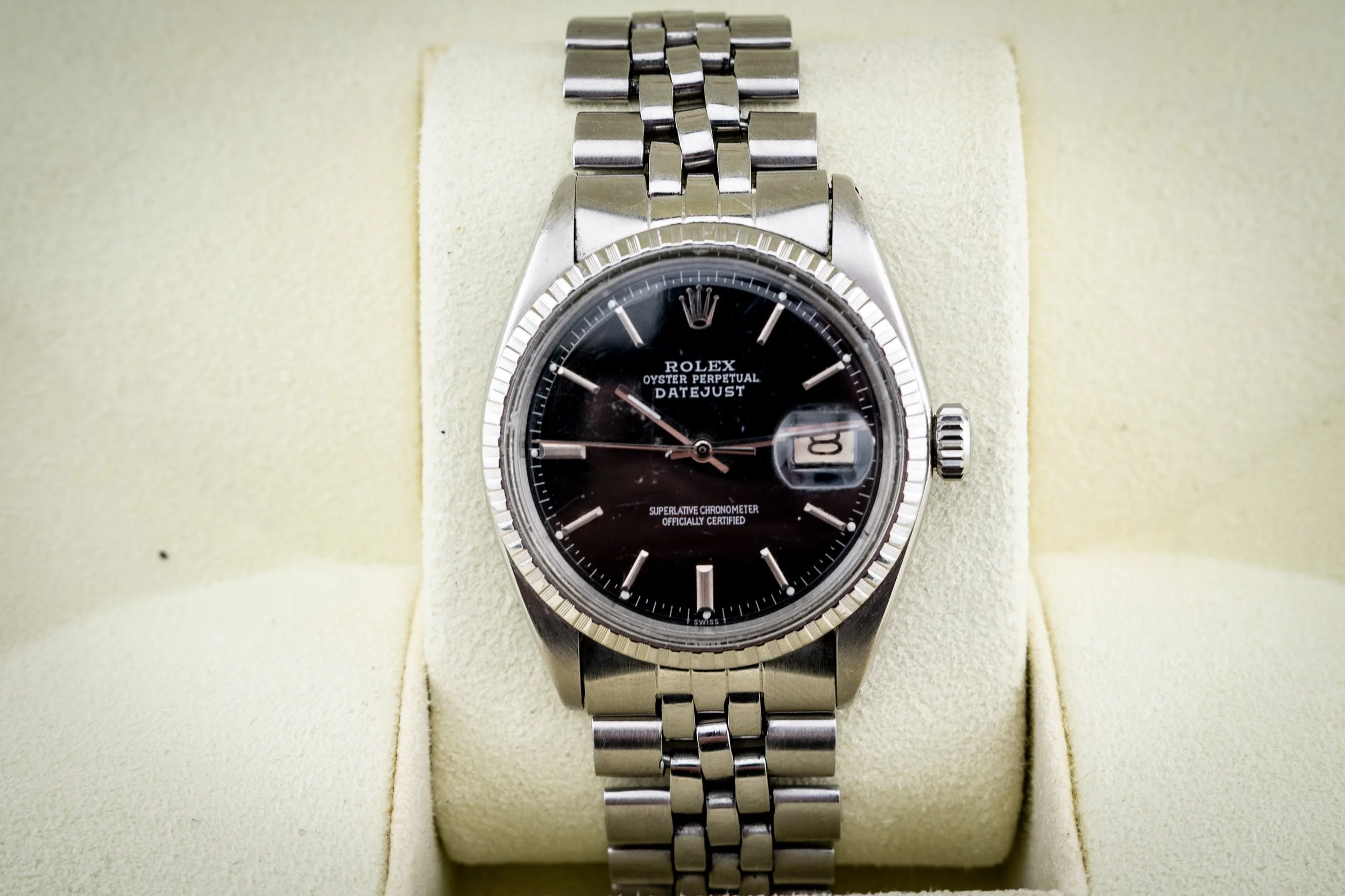
The steel bracelet changes the equation again. More visual mass, more presence — closer in mission to a luxury sports watch, without the obvious execution. The Oyster Perpetual 36 is the natural comparison. But the Nomos isn't cosplaying as a Rolex. Where Rolex trades in familiarity and prestige, this trades in originality and restraint. Different buyers. Different thesis.
Voices like Teddy Baldassarre and Adrian Barker have noted the same thing. The Club Sport belongs in the conversation. Not as an alternative. As a choice.
This one is for the person who already knows what they're looking at.
Now Available